

Guttering Professionals
Add a review FollowOverview
-
Founded Date August 31, 1935
-
Sectors Liquor Store
-
Posted Jobs 0
-
Viewed 19
Company Description
This Week’s Most Popular Stories Concerning Drainage
Understanding Roof Drainage: Key Concepts, Methods, and Best Practices
The roof plays a necessary role in the protection and longevity of a building. One vital aspect of roof design and maintenance works roof drainage. Appropriate drainage systems avoid water build-up, which can cause severe structural damage and premature deterioration. This article explores the importance of roof drainage, typical techniques, products utilized, and the very best practices to make sure effective water management.
Value of Roof Drainage
Roof drainage is crucial for several factors:
-
Preventing Water Accumulation: Standing water can result in leaks, structural damage, and prospective mold growth.
-
Enhancing Building Longevity: Proper drainage assists mitigate wear and tear on roof materials, consequently extending the roof’s life.
-
Keeping Aesthetic Appeal: A well-designed drainage system contributes to the general appearance of the structure, preventing unattractive water accumulation.
-
Mitigating Ice Dams: In colder climates, efficient roof drainage can help avoid the formation of ice dams, which can hurt gutters and roof products.
-
Ecological Responsibility: Efficient water management through roof drainage can decrease runoff and minimize the environmental effect.
Kinds Of Roof Drainage Systems
Numerous techniques can be used to make sure effective roof drainage. The most common types include:
1. Gravity Drainage
This method utilizes gravity to direct water far from the roof surface.
-
Internal Drains: Located within the building’s structure, these drains use piping systems to get rid of water straight to the ground or the structure’s drainage system.
-
Roof Drainage Leaders: These are vertical pipes utilized to bring rainwater from the roof to the ground.
2. Slope Drainage
Creating slopes in the roof structure guarantees water streams towards designated drainage points.
-
Favorable Drainage: A pitch or slope directs water to particular drains or ambuscades.
-
Improved Slope Systems: These frequently include structured designs to improve water circulation effectiveness.
3. Gutter Systems
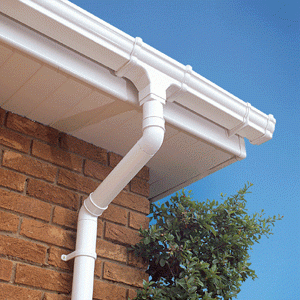
Gutters collect water that runs off the roof edges, directing it safely away.
-
K-Style Gutters: Popularly utilized due to their aesthetic and functional benefits.
-
Half-Round Gutters: Known for their traditional appearance and efficient water flow.
4. Trough Drainage
This technique incorporates large, shallow channels created to obstruct water before it accumulates.
-
Trench Drains: Ideal for large flat roofings, these systems frequently feature grates to keep debris out while channeling water.
-
Capture Basins: Positioned strategically to gather rainwater and filter out debris.
5. Green Roofing Systems
These involve plant life on rooftops that assist in water absorption and management.
-
Extensive Green Roofs: Lower maintenance and need less soil depth.
-
Intensive Green Roofs: Require more upkeep with much deeper soil and a wider variety of plants.
Secret Materials for Roof Drainage
The materials used for roof drainage systems considerably affect their durability and effectiveness.
| Product Type | Benefits | Disadvantages |
|---|---|---|
| PVC | Light-weight, corrosion-resistant | Susceptible to UV damage |
| Cast Iron | Long lasting, sound-dampening | Much heavier, prone to rust |
| Aluminum | Light-weight, resistant to deterioration | Can be dented easily |
| Stainless Steel | Very long lasting, corrosion-resistant | Costly |
| Concrete | Lasting, robust | Heavy, can crack without maintenance |
Best Practices for Roof Drainage
To ensure the longevity and effectiveness of roof drainage systems, consider the following best practices:
-
Regular Inspection: Conduct regular evaluations to determine particles accumulation, obstructions, or structural damage.
-
Preserve Clear Drains and Gutters: Promptly remove leaves, dirt, and other obstructions to ensure water streams freely.
-
Install Properly Sized Systems: Roof drainage systems should be sufficiently sized for the building’s requirements and local rains patterns.
-
Consider Local Weather Conditions: Design drainage systems thinking about the local environment to prevent flooding and other drainage concerns.
-
Make Use Of Professional Services: Hiring experienced professionals for installation and maintenance can substantially boost performance.
FAQs About Roof Drainage
Q1: What are the indications of inefficient roof drainage?
Signs of inadequate roof drainage include leaks, water stains on ceilings, mold growth, and sagging ceilings or walls.
Q2: How often should roof drainage systems be checked?
It is advised to examine roof drainage systems a minimum of twice a year, preferably in spring and fall, and after significant storms.
Q3: Can I set up a roof drainage system myself?
While minor maintenance jobs can be performed by homeowners, it is best to employ professionals for installation to guarantee it satisfies local building codes and functions properly.
Q4: What should I do if I discover clogs in my roof drainage system?
If obstructions are discovered, they should be cleared instantly. If the clog is not easily available or workable, it might be best to speak with a professional.
Q5: Are green roofings reliable for drainage?
Yes, green roofs can be extremely effective for drainage as they soak up rainwater, minimizing runoff while offering insulation and aesthetic benefits to structures.
Roof drainage is a crucial part in protecting buildings versus water damage. By understanding the types of drainage systems, the products utilized, and best practices for maintenance, homeowner can considerably improve the durability and efficiency of their roofing systems. An efficient drainage system not just prevents expensive repairs however likewise contributes to a structure’s total sustainability. Investing time and resources into reliable roof drainage is an investment in the building’s future.